

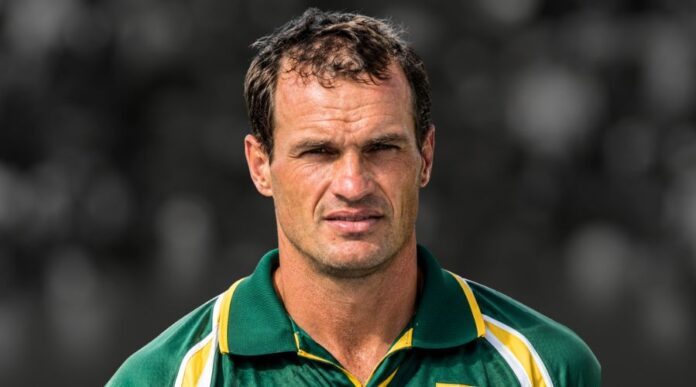
Birthday Tribute – Kepler Wessels | 14 September 2026 | Eastern Province · South Africa · Cricket
Kepler Wessels turned 69 today, 14 September 2026. This is a tribute to a cricketer who built his career across two countries, not one.
THE SCOREBOARD THAT ASKED FOR 21 OFF ONE BALL
On 22 March 1992, at the Sydney Cricket Ground, Kepler Wessels captained a South African team playing in its first-ever Cricket World Cup, having returned from international isolation less than a year earlier. Chasing England’s 252 for 6 in the semi-final, South Africa needed 22 off 13 balls when rain stopped play.
The rain-adjustment method used that year recalculated the target to 21 off the one ball that remained. South Africa lost by 19 runs — a result decided by an equation nobody in the crowd could follow, not by a ball bowled. “If I’d been in Graham’s position I’d have done the same thing,” Wessels said afterwards, refusing to blame Graham Gooch or his players for a rule neither side had written. “I can’t do anything about this.”
The farce is a large part of why cricket eventually adopted the Duckworth-Lewis method. It’s also the image most South Africans still reach for when his name comes up — even though getting a rookie team that far, twenty-two years removed from Test cricket, is the actual story.
A TENNIS SCHOLARSHIP HE NEVER CASHED
Kepler Christoffel Wessels was born on 14 September 1957 in Bloemfontein, in what was then the Orange Free State. His father introduced him to a local coach, Johan Volsteedt, when he was six; Volsteedt later coached him again at Grey College. He scored his first century at nine and by the end of the 1969 season was averaging 259.59 for Grey College’s junior sides.
He was good enough at more than one sport to have to choose. He played rugby for Free State primary schools at twelve and ranked among the province’s best young swimmers until a kidney infection forced his father to pull him out of the pool. By 1973 he was South Africa’s number-one-ranked tennis player under 16 — good enough that the University of Houston reportedly offered him a $25,000 tennis scholarship. He turned it down.
Grey College kept giving him reasons to choose cricket instead: five straight seasons at the Nuffield Week schools tournament, a stint captaining the South African Schools side, an unbeaten 130 in his last schoolboy innings.
SUSSEX, QUEENSLAND, AND A CALL FROM KERRY PACKER
He made his first-class debut for Orange Free State at sixteen in 1973-74, scoring 32. By eighteen he was opening the batting professionally for Sussex in England, and short spells at Western Province and Northern Transvaal followed before he settled at Queensland from 1979-80 — the base that would define the next stage of his career.

It was in Australia that Kerry Packer found him. Wessels was twenty-one when he was drafted into World Series Cricket, and he didn’t take long to justify it: 123 against Penrith and 137 for a Sydney club side in the trials that got him picked, then an unbeaten 136 in the one-day final against the West Indies, and 126 in a Supertest against the same attack. He was the find of the competition.
“Kepler was Mr Consistency as an opener and captain for the South Africans — an absolute South African sports hero, for sure!” – 🎙️Jay
THE PASSPORT THAT KEPT HIM OFF THE PLANE
It was really the whole story in miniature. Wessels held a South African passport, and South Africa’s own team hadn’t played a Test since 1970, banned from international cricket over apartheid with no return date in sight. When World Series Cricket’s Caribbean leg came around, visa restrictions tied to that passport meant he couldn’t get on the plane.
So he stayed in Australia and built residency into citizenship, the only route left to a Test career while his own country sat outside the game. It cost him nothing as simple as an injury or a dropped catch. It cost him the possibility of playing international cricket for the country of his birth in his twenties, in exchange for the chance to play Test cricket for any country at all.
162 AT THE GABBA, THREE RUNS OFF A 105-YEAR-OLD RECORD
Wessels made his Test debut for Australia in the second Test of the 1982-83 Ashes, at the Gabba on 26 November 1982. He scored 162 in the first innings — three short of Charlie Bannerman’s 165, the highest score by an Australian on Test debut, set in the very first Test ever played back in 1877 — and added 46 in the second. He was the thirteenth batsman to score a century on Test debut for Australia, and the first South African-born player to play Test cricket for the country. Australia won by seven wickets and Wessels took the Man of the Match award; across that series he made 386 runs at 48.25.
He kept adding to it. In April 1983 he scored 141 against Sri Lanka, the first century by a touring batsman on Sri Lankan soil. But his best cricket for Australia came against the West Indies attack of 1984-85, then the most feared bowling group in the world:
- 505 runs in the series at an average of 56.11 — more than double any other Australian batsman managed
- 90 in the fourth Test at Melbourne, in a match Australia drew to end the West Indies’ 11-match winning streak
- 173 in the fifth Test at Sydney, top-scoring in a total of 9 for 471 declared
Tony Greig questioned whether his method suited one-day cricket, and it’s true he scored only one century in 105 ODI innings across 109 matches. But he was also never once dismissed for a duck in those 105 innings — a record no other retired batsman with 50 or more ODI innings can claim. Kim Hughes had the better read on him: “Kepler hits so many boundaries that he is always going to score enough runs, and even in one-day cricket you need someone who can anchor the innings.”
BRIDGETOWN TO SYDNEY: CAPTAIN OF THE COMEBACK
South Africa’s actual return to international cricket came in November 1991, when Clive Rice captained the side through a one-off ODI series in India — the country’s first official matches in 21 years. Wessels was handed the captaincy for the tournament that followed, the 1992 World Cup, a choice contested enough that a petition backing Rice or Jimmy Cook instead gathered more than 10,000 signatures. What he did with that job is the story that opened this article.
A month after that World Cup ended, in April 1992, he led South Africa into their first Test in twenty-two years, against the West Indies at Bridgetown, Barbados, from 18 to 23 April — ten of the eleven players in that team were winning their first cap. West Indies won.
His captaincy delivered its clearest answer in January 1994, at the Sydney Cricket Ground. Set 117 to win in the fourth innings, Australia were 63 for 4 overnight and collapsed from there, losing their last six wickets for 48 runs to be bowled out for 111. Fanie de Villiers took 10 wickets in the match. South Africa won by five runs — their first Test win on Australian soil since the 1910-11 tour, when the previous win came at Adelaide in January 1911.
Kepler Wessels didn’t see the finish; he damaged a finger attempting a slip catch that morning, handing the captaincy to a young Hansie Cronje for the rest of the innings. He was reinstated for the home series that followed, which finished drawn 1-1, then led South Africa through a drawn series in England later that year before retiring, with Cronje taking the captaincy on for good.
FROM CAPTAIN TO COACH
He stayed in the game. He coached Northamptonshire from 2003 to 2006, with his son Riki in the same dressing room, then took a coaching role with Chennai Super Kings in the IPL’s inaugural season in 2008. He did consultancy work with the Highveld Lions and later became director of coaching at South Brisbane District Cricket Club in Australia. From 2018 he sat on Cricket Australia’s supplementary referee panel, taking charge of his first first-class match as a referee in March 2020.
Away from cricket, he took up lawn bowls and finished runner-up at the South African national championships twice — in the fours in 2013, and in the pairs in 2016.
From all of us at Just Plain Sport — cricket has handed a few men two flags to play under; Wessels is still the only one who captained a country back from the wilderness while wearing his. 🎂🏉