

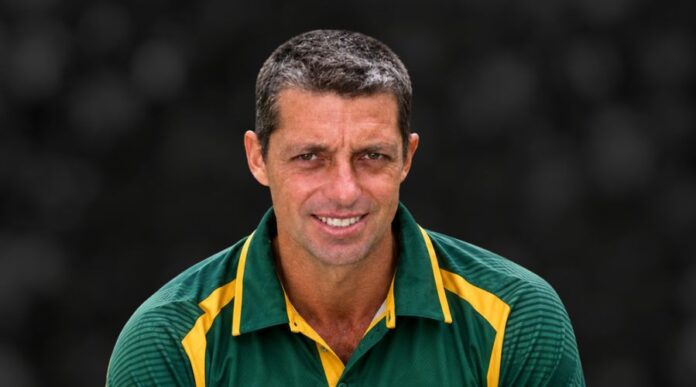
Birthday Tribute – Dave Richardson | 17 September 2026 | Eastern Province · South Africa · Cricket
Dave Richardson turned 67 yesterday. This one traces a career that took Dave Richardson fourteen years to start, and ended up running the sport itself.
BORN INTO THE GLOVES
David John Richardson was born on 16 September 1959 in Johannesburg, Transvaal. Wicketkeeping ran in the family before Dave Richardson, wicketkeeper, ever picked up a pair of gloves himself: his father, John Henry Richardson, kept wicket in 22 first-class matches, and his brother Ralph played 10 more as an all-rounder.
The habit outlasted him too. His son, Michael Richardson, became a wicketkeeper-batsman in his own right, playing county cricket for Durham.
Dave Richardson trained and qualified as a lawyer in his twenties, building a second career alongside a cricketing one that, for reasons entirely outside his control, very nearly never got an international stage at all.
FOURTEEN YEARS BEFORE A TEST CAP
Dave Richardson, Eastern Province through and through, made his first-class debut for the union in 1978, moved briefly to Northern Transvaal in 1983-84, then returned to Eastern Province for the rest of his career. Across 200 first-class matches he scored 6,981 runs and claimed 619 dismissals (579 catches, 40 stumpings) — the record of a wicketkeeper good enough to play for his country.
The trouble was, there was no country to play for. South Africa’s sporting isolation over apartheid kept the Test team out of international cricket for the entire span of Richardson’s rise through domestic ranks. By the time South Africa were readmitted in 1991, he was 32 years old.
He made his one-day debut on the readmission tour of India, keeping wicket at Eden Gardens on 10 November 1991 as Allan Donald took five wickets on his own debut. Richardson stood unusually far back to the stumps that day — Donald was bowling that fast.
21 OFF ONE BALL
Five months later Richardson kept wicket in South Africa’s first official Test in twenty-two years, away to West Indies at Bridgetown. West Indies won by 52 runs, but the result mattered less than the fact of the match itself — South African cricket was back.
Then came the 1992 World Cup semi-final against England at Sydney. Rain arrived with South Africa needing 22 runs off 13 balls. The Most Productive Overs method recalculated the target, on restart, to 21 runs off the final ball — though the SCG scoreboard famously flashed 22. Dave Richardson stood at the non-striker’s end as Brian McMillan, on strike, threw his bat in the air in disbelief.
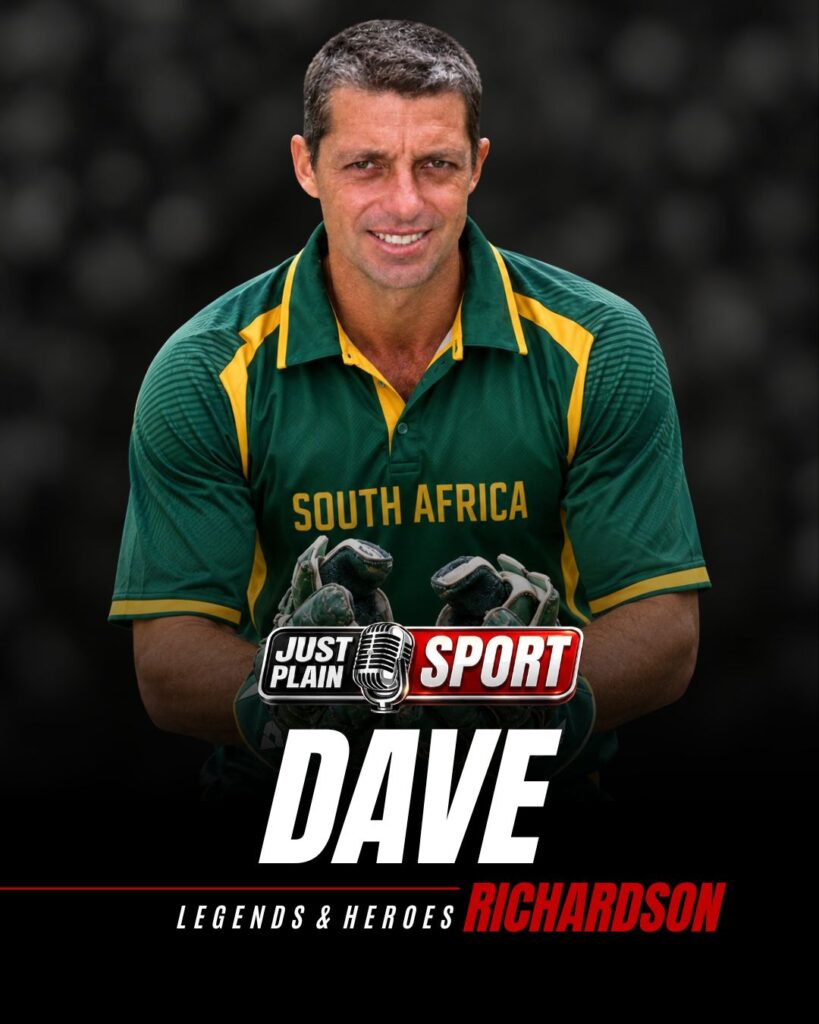
It remains one of the most infamous moments in World Cup history, and the rain-rule farce forced the sport to rethink how rain-affected targets were calculated.
“Fourteen years locked out of Test cricket, and the moment South Africa finally reach a World Cup semi-final, a rulebook beats them before the opposition even gets the chance! That’s the kind of luck Dave Richardson played through — and he just kept turning up anyway!” – 🎙️Jay
DAVE RICHARDSON, FIRST CHOICE UNTIL BOUCHER
Richardson answered the World Cup heartbreak the only way he could: by making himself hard to leave out. He was South Africa’s first-choice wicketkeeper from the country’s readmission in 1991 through to October 1997, when a 20-year-old Mark Boucher made his own Test debut against Pakistan.
His game was built on catching, not showmanship. It took him 33 Tests — until a Test against India at Cape Town in 1997 — to record his first stumping, of Venkatesh Prasad, and he finished his Test career with just two stumpings against 150 catches, among the fewest stumpings on record for any wicketkeeper with 150 or more Test catches.
By the time he retired in 1998, the numbers read:
- 42 Tests: 1,359 runs at 24.26, 152 dismissals (150 catches, 2 stumpings)
- 122 ODIs: 868 runs at 19.72, 165 dismissals (148 catches, 17 stumpings)
- 200 first-class matches: 6,981 runs, 619 dismissals (579 catches, 40 stumpings)
THE SERIES NO KEEPER HAD WON BEFORE
The best cricket of Richardson’s career came against New Zealand in the home series of November-December 1994. He scored 247 runs at an average of 82.33 and took 16 catches, including his only Test century — 109 at Cape Town.
For it, he was named Man of the Series — reported at the time as the first wicketkeeper from outside England to win the award.
The very next Test series, weeks later, humbled him just as sharply. Against Pakistan at the Wanderers in Johannesburg in January 1995, he was out for nought in both innings — a king pair. The two results, back to back, say as much about his method as either one alone: his keeping never depended on how the bat was behaving.
He did it all in the same sun hat and brown gloves that became his trademark behind the stumps for the better part of a decade.
FROM THE GLOVES TO THE BOARDROOM
Dave Richardson played his last Test in 1998. He turned to the law degree he had completed years earlier, working first as a business agent for players before moving into cricket administration.
- 2002: appointed the ICC’s first general manager, the same year he was elected an Honorary Life Member of the MCC
- 2012: promoted to ICC chief executive
- 2019: stepped down after the World Cup in England, succeeded by Manu Sawhney
- 2024: elected to Cricket Ireland’s board as an independent director; stepped down in April 2026 for personal reasons
By 2012, Dave Richardson, ICC chief executive, was setting policy for the sport that once had no room at all for South Africa. During his years running the ICC, pitch preparation at neutral World Cup venues was brought under the governing body’s own control rather than left to host associations — a legacy that outlasted his tenure.
From all of us at Just Plain Sport — from a rain-ruined World Cup night to the chief executive’s chair at the game’s own governing body, few South Africans have shaped the sport’s return to the world stage quite like he has. 🎂🏏