

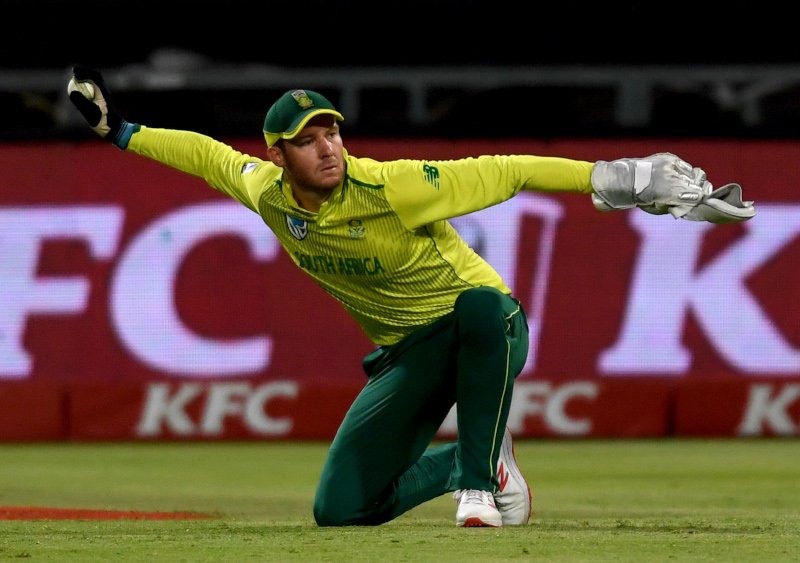
There are cricketers who accumulate runs, and there are cricketers who win games. David Miller belongs firmly in the second category. Born on this very day, 10 June 1989, in Pietermaritzburg, KwaZulu-Natal, he turns 37 today. And what a journey it has been.
Happy Birthday, Killer Miller. Cricket has never produced a more reliable man for the moments that matter most.
ROOTS: RED EARTH, WARM EVENINGS AND A FATHER’S BELIEF
Pietermaritzburg is a city that takes its cricket seriously. Sitting in the shadow of the Drakensberg foothills, the capital of KwaZulu-Natal has a long and proud sporting tradition, and it is here that David Andrew Miller grew up surrounded by the game. His father Andrew, who had played country districts cricket himself, handed David a golf set when he was just two years old, rolled a ball to him, and watched his boy hit it clean.
Not swinging at it, not missing — just hitting it, cleanly and correctly, as though it were the most natural thing in the world. Andrew Miller turned to his wife in that moment and said: he is going to play cricket for South Africa one day.
That conviction shaped everything that followed. Andrew Miller was not just a supportive father. He was intentional. He arranged coaching with former players, enrolled David at Clifton Preparatory School for his junior years, then secured him a place at Maritzburg College for secondary school. Maritzburg College is one of South Africa’s most storied educational institutions, a school with a cricket heritage as deep as any in the country, and a place that would sharpen what was already a remarkable talent.
By the age of nine, David had already scored his first hundred. He was batting against older boys, learning what it meant to be held accountable by a game that does not forgive carelessness.
The family instilled something else in him too. Whether David made a hundred or a duck, Andrew would remind him: you are still the same person. That groundedness, that refusal to be defined by a single innings, would later become one of the most distinctive things about the man who became Killer Miller.
THE EARLY CAREER: MARITZBURG COLLEGE TO THE DOLPHINS
At fourteen, David Miller made his debut for Maritzburg College’s first XI. His coach Mike Bechet had seen enough in the boy to open the batting with him. In his first match, he was floored by a short ball from a quick bowler who would later play Test rugby for France, one Scott Spedding. Miller got up, brushed himself off, and scored 42. In his next match he scored 67. The debate about whether he was ready for senior school cricket ended there.
He had caught the eye of almost every province in South Africa. Maritzburg College won him, and for four years he was the heartbeat of their batting. His style was already identifiable: an aggressive left-hander who hit the ball back down the ground with violent efficiency, grounded in a philosophy his father had given him long ago. If it is in the V, it is in the trees. If it is in the arc, it is out the park.
After school, Miller came through the KwaZulu-Natal academy system and made his first-class debut for the Dolphins in 2008. He was eighteen years old, and already had the technique and the temperament that professional coaches recognised as something genuinely special. He scored a half-century in his debut innings, helping the Dolphins reach the final of the Pro20 Series. The provincial scene had its answer. What remained was the bigger question: how far could this go?
THE SACRIFICE: THE TEST THAT NEVER CAME
The uncomfortable truth about David Miller’s career sits quietly in a single line of his international record. In more than fifteen years of professional cricket, playing alongside and against the finest players in the world, representing South Africa in nearly two hundred limited-overs internationals, David Miller never played a Test match. Not one.
The reasons are complex, and the debate around them has never fully settled. South African cricket was navigating transformation policies that reshaped selection conversations in ways that sometimes produced genuine injustice. Miller was a white player coming through during a period when the pressure to diversify the Proteas squad was at its most acute. Whether he was a direct casualty of that system or simply not quite at the required first-class average for the longest format is a question different people answer differently.
What is beyond dispute is that in 2018, at twenty-nine years old, Miller announced he was stepping back from red-ball cricket entirely to commit himself to the limited-overs Proteas. It was a dignified and graceful decision. He did not campaign publicly against selectors, did not invite sympathy, did not make it anyone else’s problem. He chose the format where he could serve his country best, and he committed to it completely. Whatever was owed to him in white-ball cricket, he intended to collect.
THE BREAKTHROUGH: POTCHEFSTROOM, 35 BALLS
If you had to find the single moment that announced David Miller to the world, you would find it on a warm October evening in Potchefstroom in 2017. South Africa were playing Bangladesh in a T20 international. Miller came to the crease with the innings in need of impetus. What followed was unlike almost anything the format had ever seen.
He hit five sixes off the first five balls of the nineteenth over. By the time that over ended, he had moved from 57 to 88 in a single set of deliveries. He reached his century off 35 balls — the fastest T20 international century ever recorded against full-member opposition, a record that still stands. He finished 101 not out off 36 balls, with nine sixes and seven fours. South Africa posted 224 for 4. Bangladesh were bowled out for 141.
It was, in some ways, the innings that formalised something that had been obvious for years. Miller was not just a hard hitter. He was something rarer and more precise: a man with the ability to take a bowling attack apart in the time it takes to watch a television advertisement, while remaining in full control of his faculties — reading the field, picking his targets, backing his hands to deliver. The nickname Killer Miller had existed before Potchefstroom. After it, it felt like fact.
THE PINNACLE: ALWAYS THERE WHEN IT COUNTS
The case for David Miller as one of the great limited-overs batsmen of his generation is not made by any single innings. It is made by a pattern that stretches across more than fifteen years of high-pressure cricket: the man is always there when it counts.
In the 2023 ODI World Cup semi-final against Australia in Kolkata, South Africa collapsed to 24 for 4 inside the powerplay. Miller walked in, absorbed the pressure, rebuilt the innings with Heinrich Klaasen, and reached his century in the 48th over with a pulled six off Pat Cummins. South Africa finished with 212, a total that would not have existed without him. His team lost, but the innings stood as one of the finest fighting hundreds in recent World Cup history.
In the 2024 T20 World Cup final in Barbados, South Africa needed 16 from the last over with the trophy in sight. Miller was there at the crease. He hit the ball as well as he could have hit it. Suryakumar Yadav took a stunning catch at the boundary. South Africa lost by seven runs, and Miller described it afterwards as the lowest he had ever felt on a cricket field. He said he felt like he had let the country down. Anyone who watched that final understood that this was a man who carried the weight of a nation’s expectations without ever once making that burden about himself.
Then came the 2025 Champions Trophy semi-final in Lahore. South Africa, chasing 363, were falling apart around him. He batted until the final delivery of the innings, finishing unbeaten on a century. When he reached three figures off the last ball, he raised his bat and dedicated the milestone with a cradle gesture to his newborn baby.
And as recently as February 2026 at the T20 World Cup in India, when South Africa slipped to 20 for 3 against the host nation, Miller walked in and scored 63 off 35 balls to power a 76-run victory. Player of the match. Again. Always there. Always doing exactly what the team needed.
The IPL journey that took him from Kings XI Punjab across more than a decade of franchise cricket to a title-winning season with Gujarat Titans in 2022 only sharpened him further. He finished that campaign with 481 runs at an average of 68 in a tournament where a brand new franchise lifted the trophy in their debut season. He was their go-to man in the crisis overs. He always is.
STILL ONLY 37
There is a particular kind of cricketer who does not accumulate statistics so much as accumulate moments. David Miller is one of those cricketers. The record books will tell you about his centuries and his strike rates and his averages. They will not fully capture what South African fans know about him: that in the most dangerous situations, when the top order is back in the pavilion and the match hangs in the balance, there is no one else they would rather see walking to the crease.
He never played a Test match. He navigated a career shaped by politics as much as performance. He gave everything to a format that the world eventually came to take as seriously as the longest game, and he became one of its finest practitioners. Off the field he is quiet, grounded, and generous with younger players — still fuelled by the same competitive fire that his father spotted when a two-year-old boy hit a rolled plastic ball cleanly through a suburban garden in Pietermaritzburg.
Wherever his story ends — whether it is at the 2027 World Cup or beyond — David Miller will have earned his place among South Africa’s most underappreciated match-winners. The recognition has been slower to arrive than it should have been. Today, on his thirty-seventh birthday, it is simply the truth.
Happy 37th Birthday, David. From all of us at Just Plain Sport — the ball always found the arc, and we are grateful we were watching when it did. 🎂🏏