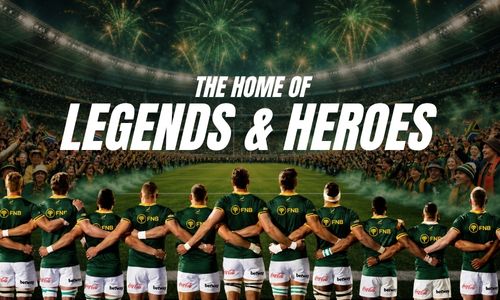

Legends & Heroes | 18 June 2026 | Louis Luyt | Transvaal Rugby Union · SARFU · Rugby Union
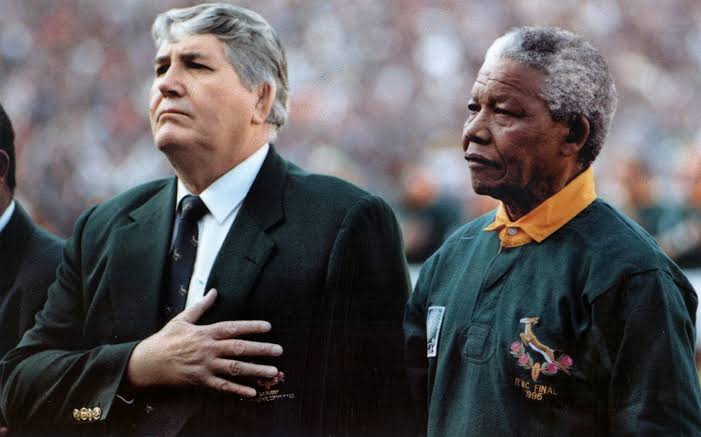
On 24 June 1995, Nelson Mandela walked onto the Ellis Park pitch in a green and gold Springbok jersey and cap. Sixty-five thousand South Africans roared. François Pienaar lifted the Webb Ellis Trophy. The country stopped. For one afternoon, everything that had divided South Africa for decades did not matter.
What most people never stopped to ask was: who made that day possible?
His name was Louis Luyt. Born on 18 June 1932 in Britstown in the Karoo. A self-made man from nothing who became the most powerful administrator in South African rugby history. He saved Ellis Park from bankruptcy, brought the Rugby World Cup to South Africa, and negotiated the television deal that paid for professional rugby across three nations. Without him, 24 June 1995 does not happen the way it did.
We remember you, Doc. This one is for you.
BRITSTOWN BOY: FROM THE KAROO TO THE TOP
Louis Luyt was not born into privilege. He was born Oswald Louis Petrus Poley on 18 June 1932, the son of a poor labourer in a small Karoo town in the middle of the Great Depression. He later took the surname Luyt when his mother remarried. In the 1940s he worked as a railway clerk. There was no money, no connections, and no guarantees.
Rugby gave him his first identity. In the 1950s he captained the Orange Free State province as a lock forward. He was a big man who played a hard position and did not back down. Those qualities stayed with him for the rest of his life. By the end of the 1960s he had built Triomf Fertiliser into a major company and become a millionaire. South African business publications named him businessman of the year in 1968, 1969 and 1971. The railway clerk from Britstown had become one of the most successful men in the country.
But rugby kept pulling him back.
THE RESCUE: HOW LUYT SAVED ELLIS PARK
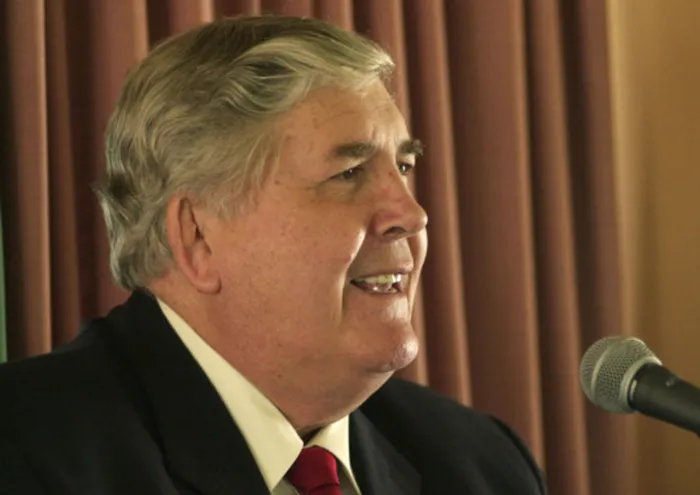
When Louis Luyt took over as president of the Transvaal Rugby Union in 1984, the union was in serious trouble. A costly redevelopment of Ellis Park into a modern 80,000-seat stadium had left the union with a debt of over R40 million. Volkskas Bank had taken control of the stadium. The union was paying R20,000 in interest every single day. There were genuine fears the union would not survive.
Luyt came in and got to work. He restructured the stadium ownership, negotiated directly with Volkskas Bank and the Johannesburg City Council, and introduced corporate suites to generate new revenue. He also negotiated a critical clause that gave the union first right of refusal if the bank ever decided to sell the stadium — a clause that proved its worth in 1987 when the bank moved to offload the asset. Luyt made sure Ellis Park stayed in rugby hands.
By 1987, the full debt of R53 million had been paid off and 86 new suites were added to the stadium. The Transvaal Rugby Union went from near collapse to becoming the most financially powerful rugby union in the country, with more cash reserves than all other South African unions and SARFU combined. That was Louis Luyt’s doing. Ellis Park still stands today because of the work he did in those years.
THE GROUNDWORK: BUILDING THE ROAD BACK IN
Before South Africa could host a World Cup, it had to get back into world rugby. That process required hard conversations with people the government of the time had no interest in talking to. In 1988, with the ANC still banned, Luyt and Danie Craven travelled to Harare and sat down with ANC representatives to begin talks about rugby unity. It was not a popular decision in certain circles. But Luyt understood that isolation was a dead end.
Those negotiations eventually led to the formation of the South African Rugby Football Union on 19 January 1992 — a single, unified, non-racial governing body for the sport. South African rugby was back, and it was back as one organisation. Luyt was also the key figure in ensuring that when rugby turned professional in 1995, it was the national unions who retained control of the game — not outside commercial interests. That fight mattered enormously for the long-term structure of South African rugby.
1995: DELIVERING THE GREATEST DAY IN SPRINGBOK HISTORY
Louis Luyt was the man tasked with organising and delivering the 1995 Rugby World Cup on home soil. He had lobbied hard for South Africa to be awarded the tournament and then made sure it was run properly. The tournament was widely regarded as the best Rugby World Cup ever staged. Venues across the country were ready, the logistics worked, and the atmosphere was unlike anything South African sport had seen before.
At the same time, Luyt was finalising one of the most important deals in the history of the game. The SANZAR agreement with News Corporation, worth US$555 million over ten years, funded the professional era for South Africa, Australia and New Zealand. It paid for player contracts, Super Rugby, the Tri-Nations, and the infrastructure that transformed rugby from an amateur sport into a professional one. Every South African rugby player who has been paid to play the game since 1995 has benefitted from a deal that Luyt negotiated.
On 24 June 1995, the Springboks beat New Zealand 15-12 in extra time in the final at Ellis Park — the stadium Luyt had rescued from bankruptcy a decade earlier. Mandela was in the stands. The nation was watching. It was the greatest day in Springbok history, and Louis Luyt had spent years quietly making sure it was possible.
AFTER RUGBY: A MAN WHO NEVER STOOD STILL
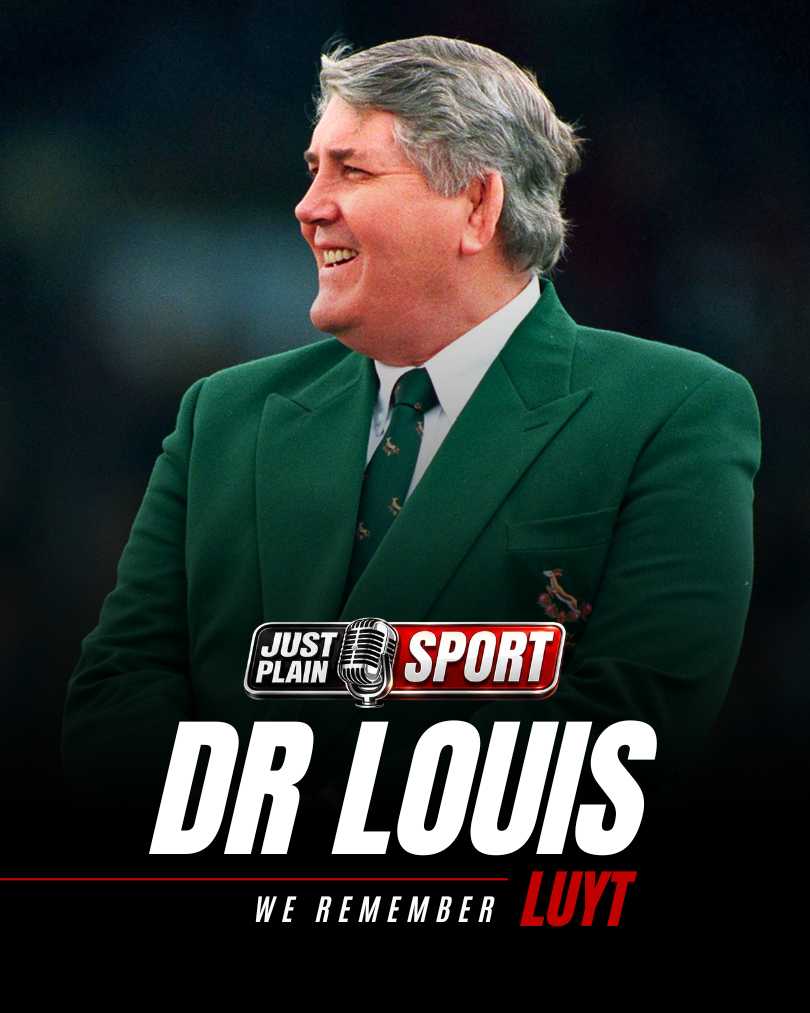
Louis Luyt resigned as SARFU president in May 1998 following a motion of no confidence from his rugby colleagues. He moved into politics, forming the Federal Alliance and winning a seat in the South African Parliament. He served as a Member of Parliament and remained a public figure until he retired from active politics. He passed away on 1 February 2013 at his home in Ballito on the KwaZulu-Natal North Coast after a long illness. He was 80 years old.
He was not a man without controversy. He was direct, he was tough, and he made enemies. But the record shows what he built. Ellis Park. A unified rugby body. A World Cup on home soil. The professional game. Those are not small things. Those are the foundations that South African rugby has stood on for the past thirty years.
We remember you, Doc. From all of us at Just Plain Sport — you came from nothing, built everything, and the Boks lifted the trophy on your ground. 🏉
Just Plain Sport | Published 18 June 2026 | Transvaal Rugby Union · SARFU · Rugby Union
📸 Images via SA Rugby / Geoff Dale