


Dale Steyn | Birthday Tribute | 27 June 2026 | Titans · Proteas · Cricket
Picture Perth. November 2016. Dale Steyn runs in off his long mark, loads up, and in the moment of release — something breaks. Not the stumps. His shoulder. A fracture in the blade that ends his day, then his year, then the era of dominance that had defined South African pace bowling for a decade.
The way it ended was cruel. But what came before it? That was something extraordinary. Dale Steyn turns 43 today, born on this same date in 1983 in Phalaborwa, a small mining town on the edge of the Kruger National Park in Limpopo. And the full arc of his story — from that dusty northern outpost to the top of the world for an unmatched 263 consecutive weeks — deserves to be told properly.
Happy Birthday, Dale Steyn. You frightened the world, and we were glad for it.
FROM THE BUSH TOWN WITH THE KRUGER AT ITS DOOR
Phalaborwa sits on the border of the Kruger National Park, and it is not the kind of place that produces Test cricketers. Steyn’s father worked in a mine there, and by most reasonable projections, the same path might well have awaited his son. The family carries an Afrikaans name but spoke English at home — a detail that tells you something about the blended, frontier character of the place where Dale Steyn grew up.
He spent his childhood obsessed with skateboarding. Cricket came later, and seriously only when the family moved south. It was in Pretoria that he gave cricket a proper go, and it did not take long before he was considered a serious prospect. From there it was Merensky High School, and then the University of Pretoria, where he played for the college and gained experience in high-pressure situations.
What Phalaborwa gave him is harder to measure. Remoteness breeds a certain self-reliance. The mining belt of Limpopo is not a coddled environment. There is something in the makeup of Dale Steyn — the aggression, the refusal to go quietly through a spell, the intensity behind the eyes — that speaks of a young man who understood early that nothing comes to you in that part of the world unless you go after it.

THE RAW YEARS: SEVENTEEN FIRST-CLASS GAMES AND A PLANE TICKET
He played only seven first-class matches before he was selected for South Africa and made his Test debut against England in 2004, in the same match as AB de Villiers. By any measure, that is a short apprenticeship. His first victim in Test cricket was Marcus Trescothick, whom he bowled with a fast in-swinging delivery. His overall performance was underwhelming, though — he took eight wickets at an average of 52.00 and was dropped after bowling poorly in England’s second innings of the fourth Test.
The response to that setback tells you who Dale Steyn was. He went to England in 2005 to play for Essex, grafting through Division Two County cricket, then came back to South Africa and spent the 2005-06 domestic season rebuilding. He returned a visibly fiercer bowler. On the tour to Sri Lanka in 2006, where his economy rate ran high and he was dropped in the return series against Pakistan, he was recalled for the subsequent Test series against New Zealand. He ended up playing both Tests, dismantling the Kiwis with ten wickets in each of them, leading South Africa to historic victories.
The lesson was not lost on anyone watching. This was not an ordinary young fast bowler finding his way. This was something different.
WHEN THE SHOULDER GAVE WAY
The injury years robbed the game of more than statistics. In December 2015, he injured his shoulder in the Durban Test against England, and what followed was a cascade. In November 2016, he fractured his right shoulder blade during the first Test against Australia in Perth, requiring surgery and a minimum six-month rehabilitation before he could even begin bowling again.
He did not seem the same afterwards. Injuries cut short his playing time, the most painful of those coming when he fractured his right shoulder in Perth. A handful of Test appearances followed, but he did not feature in the 2019 ODI World Cup or the 2021 T20 World Cup, and called time on his playing career after that. He announced his retirement from Test cricket on 5 August 2019, and from all forms of cricket on 31 August 2021.
The shoulder never came back the way it had been before Perth. That is the grief of it.
THE SEASON THAT ANNOUNCED HIM: 2007-08 AND BEYOND
In the 2007-08 summer, Dale Steyn announced himself as one of the fierce fast men of world cricket. A visibly fired-up Steyn took ten wickets in the first Test against New Zealand in Johannesburg. During that season, he achieved a tally of 78 wickets at an average of 16.24 — the most Test wickets taken by a pace bowler in a single season.
The reward was immediate. He was given the ICC 2008 Test Cricketer of the Year Award. But more than the award, the 2008 season established the foundation of everything that followed: the proof that swing at genuine pace, delivered with accuracy and fury, was not only possible but sustainable across formats and conditions.
On the tour to Australia in 2008-09, in tandem with Makhaya Ntini, Dale Steyn helped South Africa clinch their first Test series win against the Aussies. He added a ten-wicket haul in Melbourne in a match the Proteas won by nine wickets. In Nagpur a year later came his finest individual performance — his career-best figures of 7/51 in a devastating spell of reverse-swing bowling, as South Africa completed victory by an innings and six runs in the series opener.
THE PINNACLE: 263 WEEKS AT THE TOP OF THE WORLD
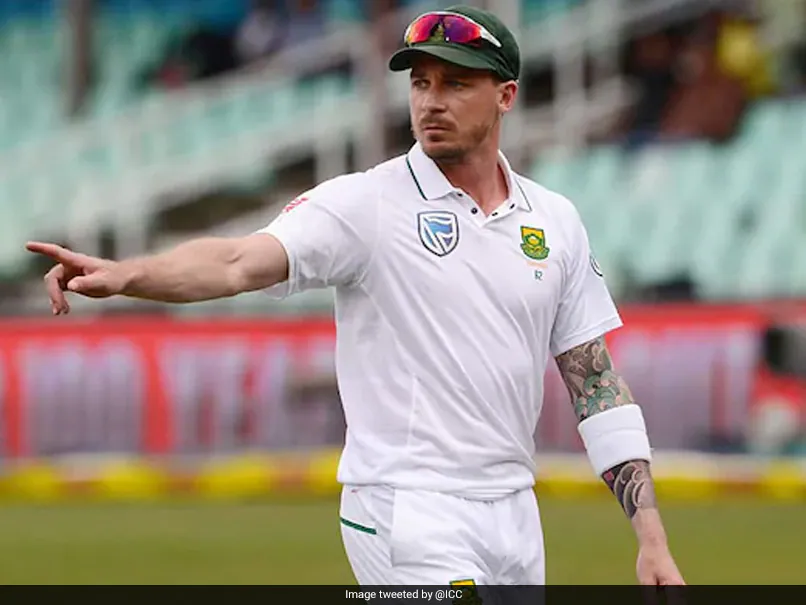
The number that defines Dale Steyn’s career is not 439. It is 263. Steyn dominated the number one spot in the ICC Test rankings for a record 263 weeks between 2008 and 2016. Sri Lanka’s Muttiah Muralitharan sits next on the list with 214 weeks. Nobody — spinner, seamer, from any era of the modern rankings era — has spent longer at the top.
He took 80 Tests to reach the milestone of 400 wickets — the joint quickest fast bowler to take 400 Test wickets along with Sir Richard Hadlee. His Test bowling strike rate of 42.3 is the best for any bowler in history with a minimum of 200 wickets. He finished with 439 Test wickets at an average of 22.95, with 26 five-wicket hauls and five ten-wicket hauls. He was named to the ICC Test Team of the Year eight times.
In December 2018, during the first Test against Pakistan, Dale Steyn became South Africa’s leading wicket-taker in Test cricket, surpassing the record held by all-rounder and former captain Shaun Pollock. That particular record had seemed almost untouchable for the better part of a generation. He took it anyway.
FROM STRIKE BOWLER TO TEACHING THE ART
In December 2021, Steyn was appointed as the fast bowling coach of Sunrisers Hyderabad for the 2022 IPL season. In May 2023, he was appointed bowling coach of Major League Cricket team Washington Freedom. And then came the chapter that may define his legacy beyond playing.
Dale Steyn served as bowling coach of Sunrisers Eastern Cape in the SA20 league for three seasons from the competition’s inception in 2023. Under his guidance, the team reached the finals in all three editions, winning the SA20 championship twice and finishing as runners-up once. In his departure message, Steyn wrote: “Massive thanks to Sunrisers EC. Three seasons and three finals, twice won and a runner-up. What more could one ask for — loved it.”
The same man who broke stumps for a decade is now building bowlers. The instinct is the same. The intensity, by all accounts, has not gone anywhere either.
Happy 43rd Birthday, Dale Steyn. From all of us at Just Plain Sport — the Steyn Gun may have been put away, but no one who watched you bowl will ever forget the sound it made. 🎂🏏
📸 Images via SA Cricket / Sky Sports / ICC