


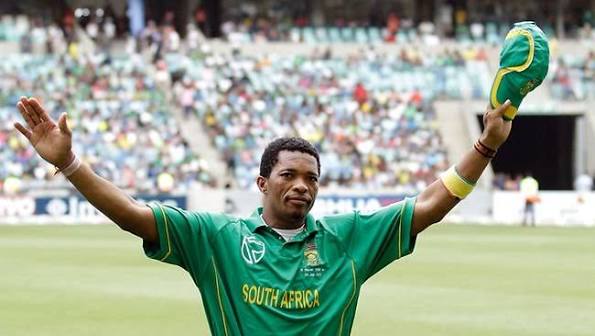
Birthday Tribute | Makhaya Ntini | July 6, 2026 | Border · South Africa · Cricket
There is a stretch of road outside Mdingi where a barefoot boy once ran cattle across dry Eastern Cape ground, arm swinging loose at his side like he already knew what it was built for. He didn’t have shoes. He didn’t have a coach. He didn’t, in any way that mattered yet, have a future in the game that would eventually carry his name across Lord’s honours boards and into the history of South African cricket.
Makhaya Ntini turns 49 today, born on this day in 1977 in that same village, and the distance between that dirt road and 390 Test wickets remains one of the most remarkable journeys the sport has produced.
Happy Birthday, Makhaya. From herding cattle with no shoes to becoming the first black cricketer to represent South Africa in Test cricket, his story was never just about the ball he bowled — it was about the door he kicked open.
ROOTS: A VILLAGE CALLED MDINGI
Mdingi is a small village near King William’s Town in the Eastern Cape, and it shaped Makhaya Ntini in ways that had nothing to do with cricket at first. He grew up herding cattle, often without shoes, in a region that carried the weight of decades of neglect. Cricket was not part of his world until a development officer named Raymond Booi spotted something in the way a barefoot 15-year-old bowled during a chance encounter while introducing the game to rural boys in the area.
Booi lent him a pair of plimsolls. That single act put Makhaya Ntini in a net session in King William’s Town, then a junior festival in Queenstown, then a place at Dale College — one of the country’s best cricketing nurseries. He arrived there at 14, unable to speak English, and had to learn the language of the game and the classroom at the same time. Two years later he was touring England with the South Africa Under-19 side. The distance he covered in that short span says as much about his character as anything he would later do with a cricket ball in his hand.
THE EARLY CAREER: FROM QUEENSTOWN TO THE NATIONAL SET-UP
Ntini made his first-class debut for Border in November 1995, and by his own admission the results were modest — seventeen wickets in that debut season, at an average that gave no hint of what was to come. But the under-19 tours told a different story. Against India in 1996, he produced the kind of spell that made national selectors sit up: six wickets in an innings, followed by three more in the second. He was raw, expensive at times, but unmistakably fast and unmistakably fearless.
By 1998 he had forced his way into the senior Proteas side, making his Test debut against Sri Lanka and his one-day debut against New Zealand the same year. Makhaya Ntini became the first black cricketer to represent South Africa in the Test arena — a fact that carried enormous symbolic weight in a country only a few years removed from apartheid, and a burden that a 21-year-old fast bowler had never asked to carry alone.
THE LONELY YEARS
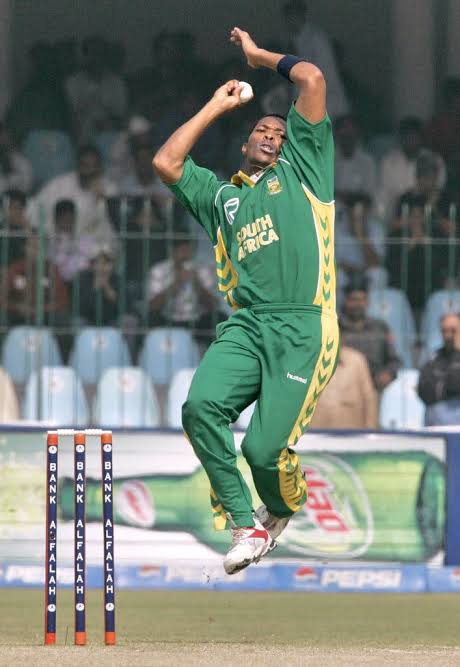
For all the wickets and all the records that followed, Makhaya Ntini has spoken candidly in later life about how isolating those early years in the Proteas set-up actually were. He has described running to stadiums and back to hotels rather than sit alone on the team bus, and has spoken about periods of feeling forever on the outside of a dressing room he had every right to belong in. It is not the kind of detail that shows up in a scorecard, but it belongs in any honest account of what it cost him to be first.
What makes the story remarkable is not that the isolation existed — plenty of pioneers carry that particular scar — but that it never dulled his hunger for the ball. If anything, the difficult years around the turn of the millennium, when his place in the side was genuinely in question, seemed to sharpen him. He returned from a tough Sharjah tournament in 2000 with visibly greater control, the first sign of the bowler he was about to become.
THE BREAKTHROUGH: TEN AT LORD’S
Every great fast bowler has the one afternoon that changes how the game sees them. For Makhaya Ntini it came in 2003 at Lord’s, where he became the first South African to take ten wickets in a Test match on that ground. His name went up on the Lord’s honours board, a piece of cricketing immortality reserved for very few, and it announced him properly as one of the most dangerous new-ball bowlers in world cricket.
It was not a one-off. Two years later, in Trinidad against the West Indies, he produced the best match figures ever recorded by a South African bowler — thirteen wickets for 132 runs. Between Lord’s and Trinidad, the boy who once had no shoes had built the finest fast-bowling résumé of his generation.
THE PINNACLE: A CENTURY OF TESTS
Ntini’s career reached its symbolic peak on 16 December 2009, when he played his 100th Test — still the only black South African cricketer to reach that milestone. Fittingly, Makhaya Ntini marked it by bowling Andrew Strauss, triggering a promise from sponsors of a free round of drinks for every fan in the ground. By the time he retired from international cricket in January 2011, he had taken 390 Test wickets in 101 matches, only the third South African ever to pass 300, behind legends Allan Donald and Shaun Pollock.
Across formats he finished with over 650 international wickets, twenty-two five-wicket hauls, and a reputation as one of the most relentless, big-hearted fast bowlers the game has seen. He remains one of only three men in history to play more than 100 Tests without ever scoring a half-century — a strange footnote for a career built almost entirely on what he did with the ball, not the bat.
FROM STRIKE BOWLER TO CUSTODIAN OF THE GAME
Retirement did not slow Ntini down. He moved into coaching, taking on the role of Zimbabwe’s assistant and later interim head coach, passing on the technical detail of run-up, seam position and release that took him fourteen years to master. Closer to home, he set his sights on something more personal: a cricket academy in Mdantsane, not far from the village where he grew up, built to give Eastern Cape children the pathway he never had.
It is a project rooted entirely in where he came from, aimed at making sure the next barefoot bowler with talent does not have to wait for a chance encounter on a dirt road to be discovered.
Happy 49th Birthday, Makhaya. From all of us at Just Plain Sport — you turned a barefoot boy’s dream into a door that stayed open for everyone who came after you.
Images via SA Cricket / NY Times